Skincare Advent Calendar: How to Choose One and Use It Well
How to judge a calendar's real value, why minis cannot show anti-aging results, and how to turn 24 little doors into a smart testing plan
Every November, skincare advent calendars fill store shelves and social feeds. Behind each little door sits a mini cleanser, a sachet of serum or a tiny jar of cream, and the box usually promises a total value far above its price. For the person opening it, the appeal is obvious: a small surprise every morning through December and a chance to try products you would never buy at full size.
A calendar can be a fun gift and a genuinely useful way to discover new favorites. It can also be a fast way to irritate your skin and learn nothing. This guide explains how to judge what you are really buying, why minis cannot prove that an anti-aging product works, and how to open those doors in a way that actually tells you something.
What You Are Actually Buying
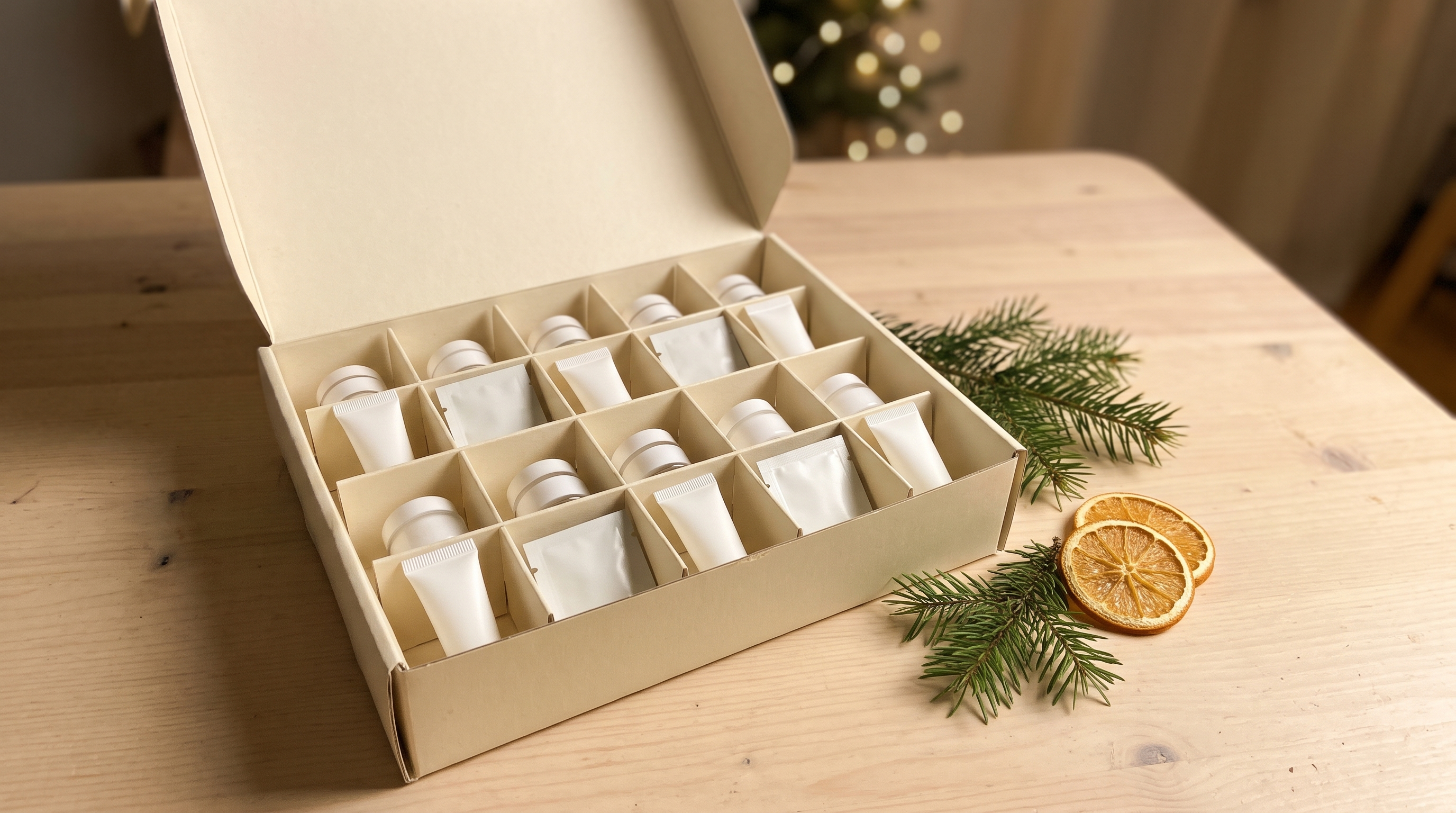
Calendars come in 12-day, 24-day and 25-day formats, and most mix a few full-size products with many deluxe samples and single-use sachets. The headline “worth” figure on the box is the price you would pay if every item were bought separately at its full retail rate, which is rarely how anyone would shop.
A more honest way to judge value is to look at the volume. Add up the milliliters or grams of the products you would genuinely use, divide the price by that total, and compare the result with the price per milliliter of a full-size product you already like. Calendars that look generous often rely on lip balms, sheet masks and body products to fill doors, while the expensive serums come in tiny 5 ml tubes.
If you are buying for someone else, the same logic from our skincare gift set guide applies: a box built around one or two proven products is worth more than one padded with minis.
Why a Mini Cannot Show Anti-Aging Results
The ingredients with the best evidence for aging skin work slowly. In one study, retinol increased collagen production within four weeks, but a visible reduction in facial wrinkles took 12 weeks of regular use to measure [1]. Another trial, in adults with an average age of 87, applied retinol to the arms for 24 weeks before it reported a clear improvement in fine wrinkles [2].
Your skin needs about 12 weeks of nightly retinol to show smoother wrinkles, far longer than any 5 ml mini in a calendar will last.
Your skin needs about 12 weeks of nightly retinol to show smoother wrinkles, far longer than any 5 ml mini in a calendar will last.
A small tube of face serum might last two or three weeks of nightly use. That is long enough to judge texture, scent and whether a product stings, but not long enough to judge whether it firms, smooths or fades anything. Treat a calendar as a sampling tool for how products feel, not as proof of what they do.
The Problem With a New Product Every Day
The usual way to use a calendar is to open a door and try whatever is inside that day. For skin, that is close to the worst possible experiment.
Contact allergy is more common than most people assume. In a large study of the general population across five European countries, 27% of adults had at least one positive patch test to a standard set of allergens [3]. Fragrance allergy alone affected about 2% of people under a conservative definition, and it was roughly twice as common in women as in men [4]. Many calendar products are scented, and several may share the same fragrance materials or preservatives.
If you start a new cleanser, serum and cream in the same week and your face turns red and itchy, you have no way to know which one caused it. Worse, irritation from one product can make your skin react to everything else you apply for days afterward, so a good product may get blamed and thrown out.
Turn the Calendar Into a Testing Plan
Dermatologists have a simple method for checking whether a product suits you, called the repeated open application test. In the original study, patients applied the substance twice a day for 7 days to the inner forearm near the elbow crease, stopping early if a rash appeared [5]. The test picked up reactions that a single application would have missed.
Your skin can take up to 7 days of repeated use to show a reaction, so testing 2 new products a week gives clearer answers than opening 24 in a row.
Your skin can take up to 7 days of repeated use to show a reaction, so testing 2 new products a week gives clearer answers than opening 24 in a row.
In practice, that means you can still open a door every day and enjoy the ritual, but set the products aside rather than using them all at once. Each week, pick one or two leave-on products to test. Apply a little to the inner forearm twice a day for a week. If nothing happens, try it on a small patch of the face for a few more days before adding it to your routine. Rinse-off products such as cleansers and masks carry less risk and can be tested more quickly.
When you do add a product, put it in the right place. Our guide to skincare routine order explains where serums, oils, creams and sunscreen belong so that a new product is not undone by the wrong layering.
Which Minis Are Worth Keeping
Some calendar products are more useful than others. Sunscreen samples are worth testing because texture and finish decide whether you will wear sunscreen every day. Gentle cleansers and plain moisturizers are easy wins if they feel good. Vitamin C serums are worth trying for feel, although they degrade once opened, so use them quickly.
Products to approach with care include strong acid peels, scrubs and anything with a long list of plant extracts and fragrance. A calendar is also a poor place to start retinol for the first time. Retinoid minis come in unknown strengths, and starting one alongside several other new products is a recipe for irritation. If you want to begin retinol, follow a slow plan such as the one in our retinol for beginners guide instead.
What to Skip if Your Skin Is Sensitive
If you have sensitive or reactive skin, or a known fragrance allergy, read the full ingredient list of each item before using it. Look for “fragrance,” “parfum” and named fragrance allergens such as linalool and limonene. Our guide to fragrance-free skincare explains which labels you can trust and which ones can still hide scent.
For the most reactive skin, a calendar may simply be the wrong gift. A single fragrance-free product the person already knows they tolerate is kinder than 24 unknowns.
A Quick Checklist Before You Buy
- Value: Work out the price per milliliter of the products you would actually use.
- Formats: Prefer calendars with a few full-size items over dozens of sachets.
- Fragrance: Check whether the brand lists ingredients online; skip heavily scented lines for sensitive skin.
- Actives: Treat retinoid and acid minis as optional extras, not as reasons to buy.
- Plan: Decide in advance to test one or two leave-on products per week.
After the Last Door
By the end of December, the best outcome is a short list of products you know your skin tolerates and enjoys, not a shelf full of half-used tubes. The real changes in aging skin come from what you use every night for months, and that is where one proven active earns its place.
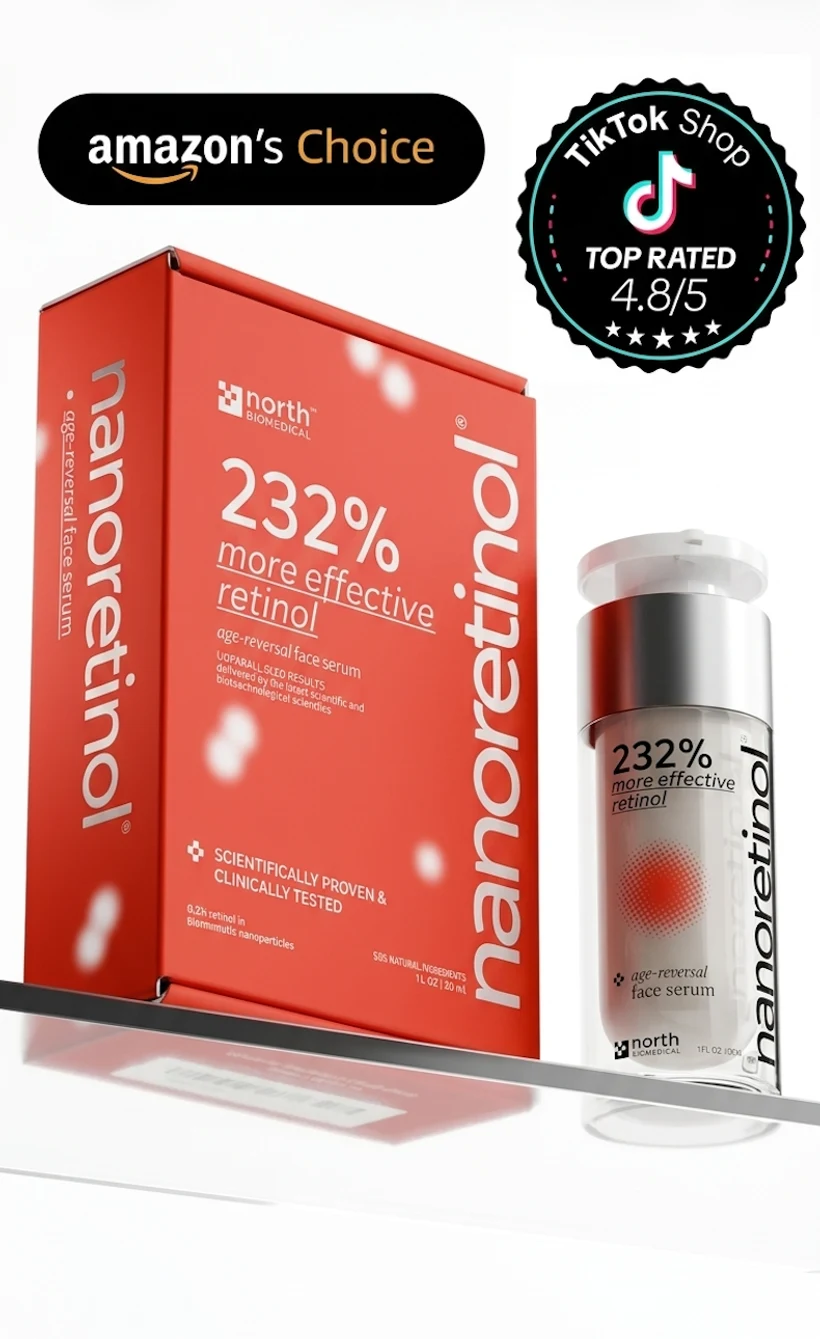
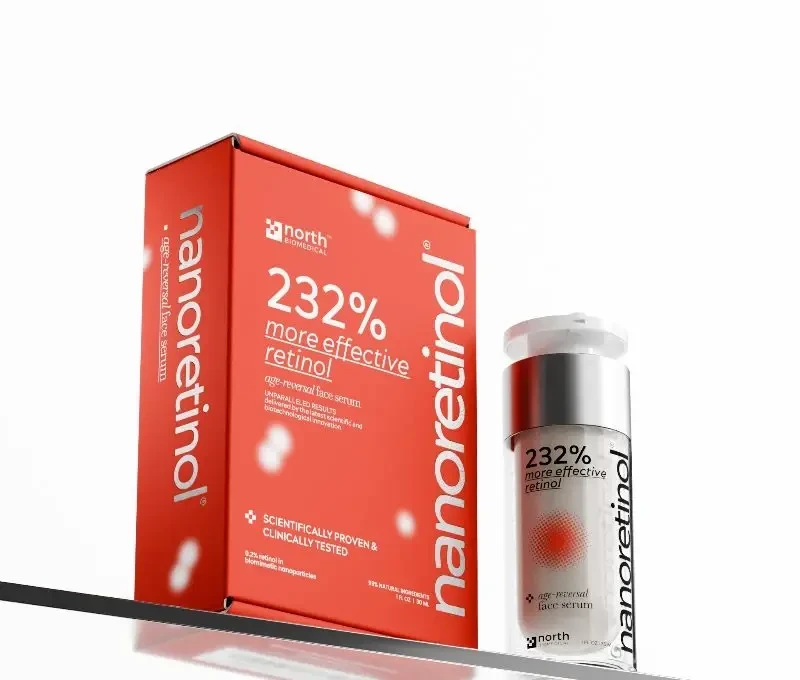
For many people, that active is retinol, as long as it does not cause the redness and peeling that make people give up. Nanoretinol delivers 0.2% retinol inside biomimetic lipid nanoparticles, so it reaches the skin without damaging the barrier the way conventional formulas can. In testing it was 232% more effective in collagen recovery than conventional retinol, and over 56 days of use it increased skin firmness by 61% and elasticity by 56%, with milder side effects [6]. It is a water-based gel suitable for all skin types, including sensitive skin, which makes it an easy product to keep using long after the calendar is empty.
References
- Kong R, Cui Y, Fisher GJ, et al. “A comparative study of the effects of retinol and retinoic acid on histological, molecular, and clinical properties of human skin.” Journal of Cosmetic Dermatology. 2016;15(1):49-57. doi:10.1111/jocd.12193
- Kafi R, Kwak HS, Schumacher WE, et al. “Improvement of naturally aged skin with vitamin A (retinol).” Archives of Dermatology. 2007;143(5):606-612. doi:10.1001/archderm.143.5.606
- Diepgen TL, Ofenloch RF, Bruze M, et al. “Prevalence of contact allergy in the general population in different European regions.” British Journal of Dermatology. 2016;174(2):319-329. doi:10.1111/bjd.14167
- Diepgen TL, Ofenloch R, Bruze M, et al. “Prevalence of fragrance contact allergy in the general population of five European countries: a cross-sectional study.” British Journal of Dermatology. 2015;173(6):1411-1419. doi:10.1111/bjd.14151
- Hannuksela M, Salo H. “The repeated open application test (ROAT).” Contact Dermatitis. 1986;14(4):221-227. doi:10.1111/j.1600-0536.1986.tb01229.x
- North Biomedical LLC. “Nanoretinol vs. Conventional Retinol: Efficacy in Collagen and Elastin Recovery.” Clinical Study Summary, 2024. Study summary