How Long Does It Take for Tretinoin to Work? The Clinical Timeline
How long does it take for tretinoin to work? A week-by-week timeline from clinical trials, split by target: acne, pigmentation, fine lines and collagen.
Read article →
Written by the North Biomedical® team to provide thoroughly researched content on skincare science, anti-aging breakthroughs, and the latest advances in dermatological technology.
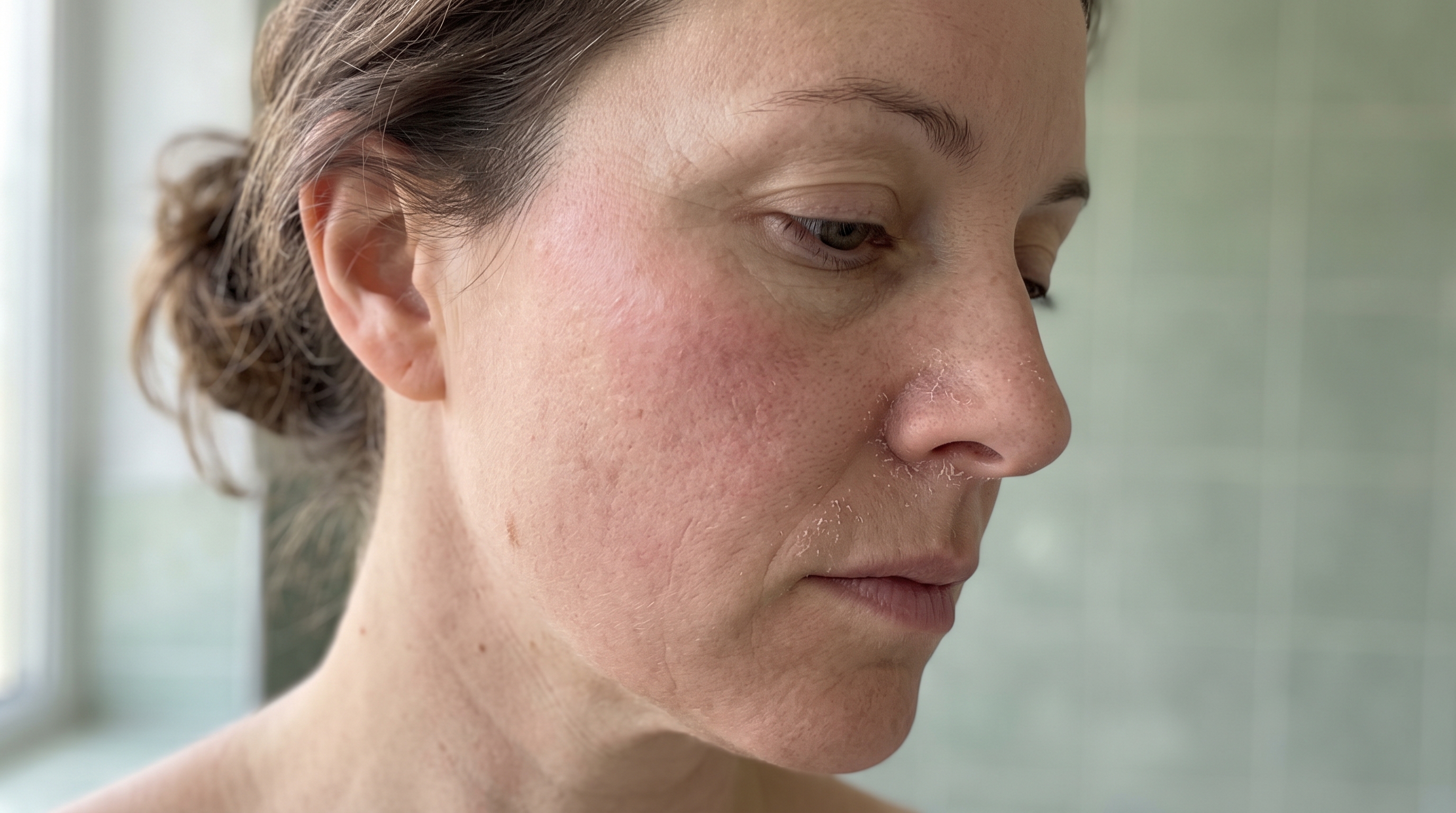
How long does it take for tretinoin to work? A week-by-week timeline from clinical trials, split by target: acne, pigmentation, fine lines and collagen.
Read article →
How to apply eye cream correctly: the orbital rim boundary, how much to use, the 2 mm rule from migration studies, and where it belongs in your routine.
Read article →
Do you need sunscreen indoors? What window and car glass really transmit, why your screens emit no UV at all, and the honest cutoff for indoor SPF use.
Read article →
Choosing the best collagen cream for face: what collagen creams genuinely deliver, how to read the label, and which ingredients actually rebuild collagen.
Read article →
How to pick the best face scrub: what physical exfoliation actually removes, which particles to avoid, how often to use one, and what a scrub can never fix.
Read article →
Hyaluronic acid vs glycerin compared: how each humectant holds water, which works better in dry air, and how to choose between them for your skin.
Read article →
How to heal sunburn fast: the real 4 to 7 day timeline, what helps in the first 24 hours, why you should never peel, and what the burn leaves behind.
Read article →
Lactic acid vs glycolic acid: how molecule size, water affinity and pH decide which AHA suits your skin, and what neither acid can do about deep lines.
Read article →
Niacinamide vs hyaluronic acid: what each ingredient reaches, why molecular weight decides whether HA hydrates, and why neither one rebuilds collagen.
Read article →
How to choose a microcurrent device by amperage, waveform, and gel conductivity instead of price — and what a microcurrent lift can and cannot change.
Read article → 