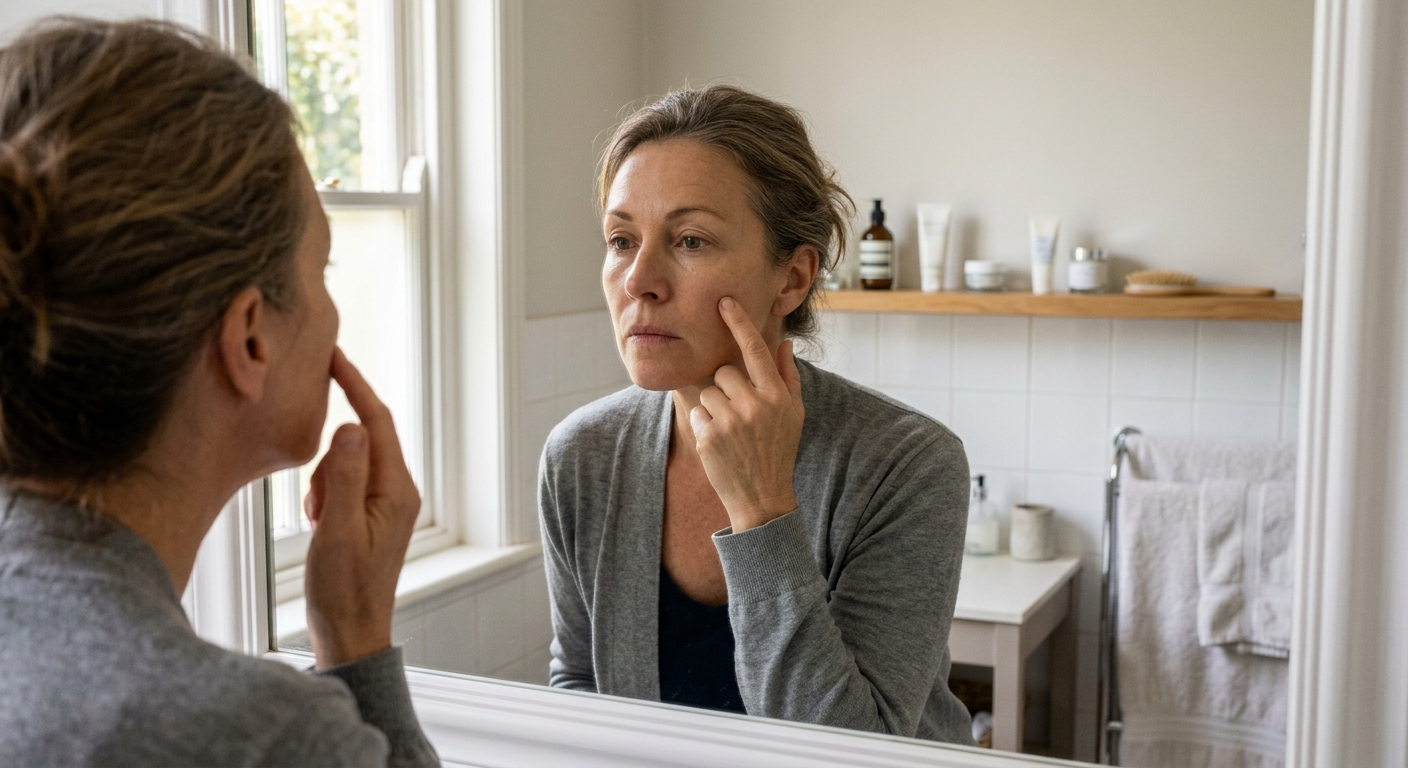
Slugging for Aging Skin: Does the Viral Skincare Trend Actually Work?
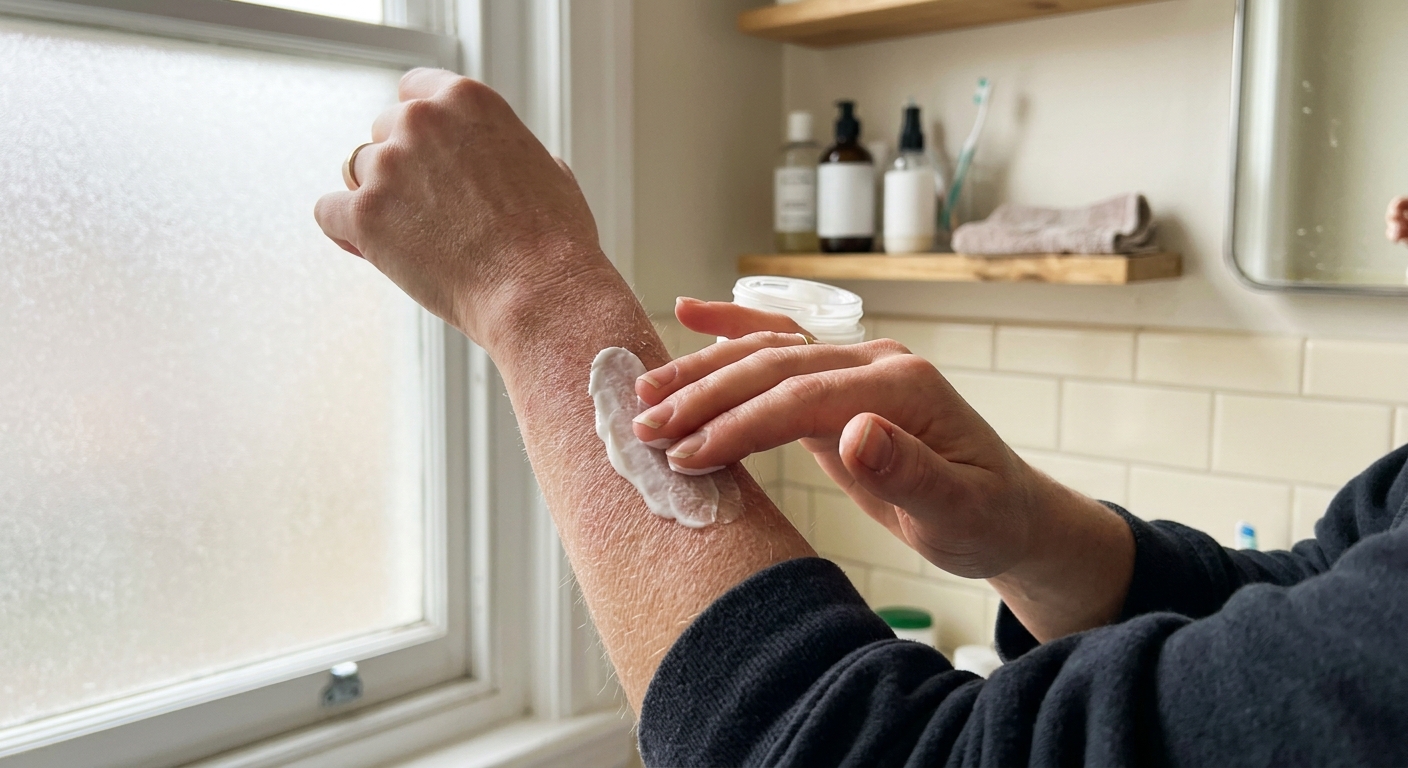
Slugging seals the skin with an occlusive such as petrolatum to reduce water loss. Learn who benefits, how to do it safely, and when not to layer it over actives.
Read article →Written by the North Biomedical® team to provide thoroughly researched content on skincare science, anti-aging breakthroughs, and the latest advances in dermatological technology.
Slugging seals the skin with an occlusive such as petrolatum to reduce water loss. Learn who benefits, how to do it safely, and when not to layer it over actives.
Read article →
Hyaluronic acid benefits include deep hydration, plumper skin, and reduced wrinkles. Learn how molecular weight affects absorption and why HA matters after 40.
Read article →
Vitamin C serum benefits include collagen synthesis, photoprotection, and dark spot fading. Learn how L-ascorbic acid fights skin aging and pairs with retinol.
Read article →
Menopause face changes are driven by estrogen loss and collagen decline. Learn how to rebuild skin firmness, hydration, and elasticity with proven ingredients.
Read article →
Sun damage face repair is backed by clinical evidence. Learn which ingredients reverse photoaging, rebuild collagen, and restore skin texture after UV damage.
Read article →
Alpha arbutin inhibits tyrosinase to fade dark spots and hyperpigmentation safely. Learn the science, optimal concentrations, and how to combine it with retinol.
Read article →
Probiotics for skin health work through the gut-skin axis to reduce inflammation, boost collagen, and fight aging. Here's what the science actually shows.
Read article →
Red light therapy for wrinkles uses photobiomodulation to stimulate collagen synthesis without UV damage. Here's what clinical trials actually show.
Read article →
Rosehip oil benefits for skin include scar healing, hydration, and antioxidant protection. We review the science, fatty acid profile, and how it compares to retinol.
Read article →
Do copper peptide serums work? See what GHK-Cu evidence supports for collagen and repair, where topical data falls short, and how it compares with retinol.
Read article →